
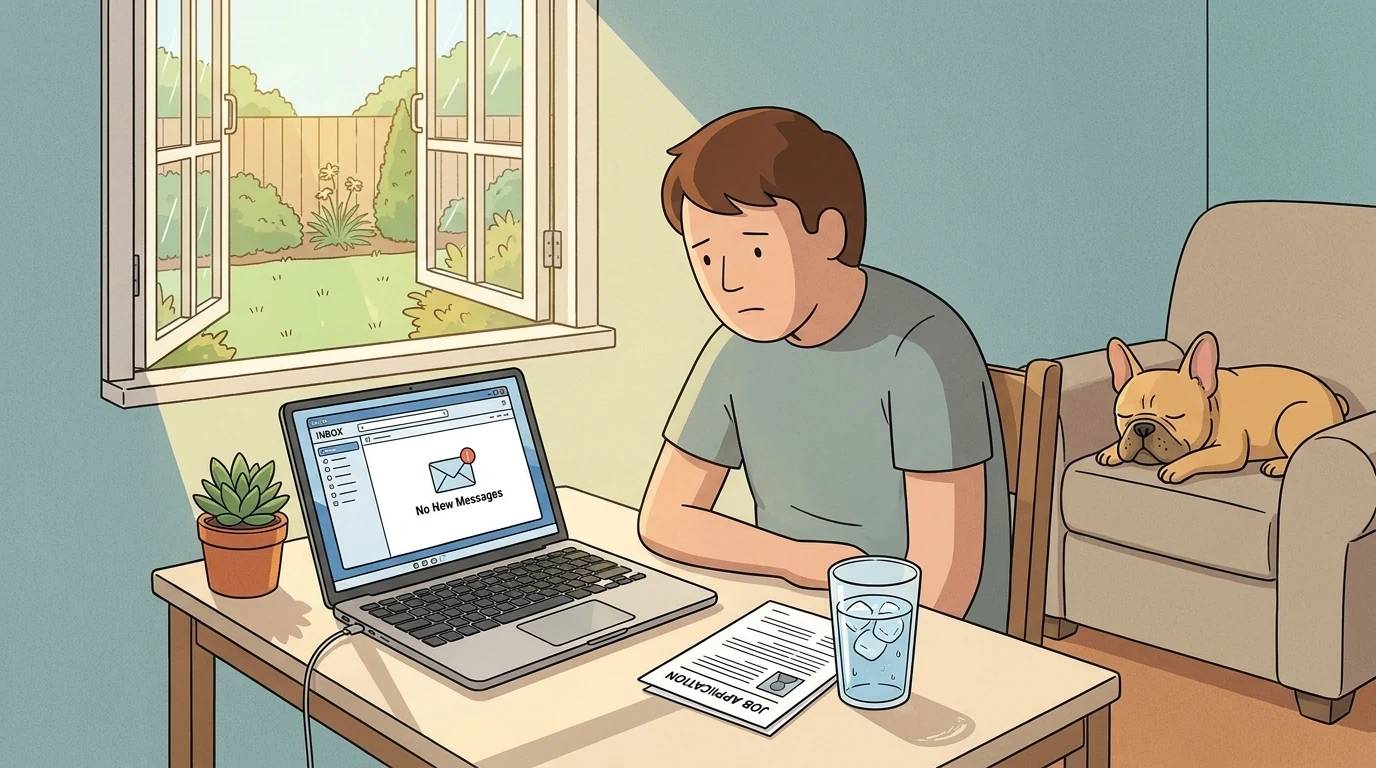
Why No One's Responding to Your Applications in Summer
You applied three weeks ago. You refreshed the inbox. Nothing came back.
So you started doing the math on yourself. Wrong resume. Wrong wording. Wrong you. Stop. The silence you're staring at in July is almost never about your application. It's about the season. Decision-makers are on a beach. Panels can't get four people in one room. Budgets are mid-cycle and frozen. The calendar went quiet, and you're reading it as rejection.
Key Takeaways
- Summer silence is usually a timing problem, not a quality problem with your resume.
- Four things stall hiring in summer: vacations, panels that can't convene, frozen reqs, and overloaded recruiters.
- Don't panic-apply to everything or hammer an out-of-office inbox with daily follow-ups.
- Keep your pipeline wide, space follow-ups out, and use the dead air to sharpen your materials.
- The fall ramp is real. Reqs reopen and replies pick up once people return.
It's the calendar, not your resume
Here's the reframe. The question isn't "what's wrong with me." It's "what's wrong with the season." And plenty is wrong with the season.
Hiring slows in summer because the humans who do the hiring slow down. They take PTO. They cover for each other. They push decisions to "when everyone's back." None of that shows up in your inbox. You just see a void and fill it with self-doubt.
The void is real. Your interpretation of it is the only thing that's off.
The four reasons summer inboxes go quiet
Decision-makers are out. The hiring manager who needs to sign off on you is in a different time zone with their phone in a drawer. One person's vacation can freeze a whole pipeline for two weeks.
Panels can't convene. Modern hiring needs three to five people in a loop. In summer, getting all of them free in the same week is a scheduling nightmare. The req doesn't die. It waits.
Reqs freeze for mid-year budgets. Many companies hit budget checkpoints mid-year. Headcount gets paused, re-approved, or shuffled. A role you applied to may be sitting in approval limbo, not in anyone's inbox. Hiring naturally cools in summer; the federal data on job openings and hires bounces seasonally too, which you can track in the JOLTS report from the BLS.
Recruiters are covering double. When half the recruiting team is out, the half that's left absorbs the load. They're triaging two desks. Your application is in a longer queue behind a thinner staff. Research on how managers actually make decisions shows that overloaded reviewers default to the easy, the urgent, and the familiar, as Harvard Business Review has documented at length. You're not being ignored. You're being deprioritized by arithmetic.
If you want the longer view on this, the summer slowdown is real and predictable. It happens every year.
What not to do
Two moves feel productive and quietly hurt you.
Don't panic-apply to everything. When the replies stop, the instinct is volume. Blast 40 applications in a weekend. But a spray of generic resumes lowers your hit rate everywhere. You burn your time and you train yourself to send weaker material. Fewer, sharper applications beat a flood of forgettable ones.
Don't hammer an out-of-office inbox. Following up daily on a req where the manager is on PTO doesn't speed anything up. It lands in a pile they'll skim later, and it reads as anxious. You can't pressure a calendar. A nudge into an empty room is still an empty room.
What to do instead
Keep the pipeline wide. Don't bet the summer on one "perfect" role. Reqs freeze and unfreeze without warning. Five to ten live conversations means one stall doesn't sink your month. Width is your insurance against a season you don't control.
Space your follow-ups out. One follow-up about a week after applying. Another a week or so after that if it's warranted. Then let it breathe. The goal is to stay visible without becoming the candidate who can't read a room. For the actual cadence and wording, here's how to follow up after applying without sounding desperate.
Prep the resume while you wait. This is the move most people skip. The dead air is a gift. Use it. Tighten your bullets to outcomes, not duties. Mirror the language of the roles you actually want. Build the answers to the questions you keep fumbling. When the fall ramp hits, you want to already be sharp, not scrambling.
When to expect the thaw
The silence has an end date. People come back. Reqs reopen. Panels reconvene. The fall ramp is one of the most reliable patterns in hiring: late August into September, replies pick up and decisions that sat all summer finally move.
So treat July and August as the off-season, not the verdict. You're not losing. You're between innings.
The candidates who win the fall ramp aren't the ones who panicked in July. They're the ones who used the quiet to get ready. While the inbox is silent, make the resume bulletproof. Gate Crashers turns your own experience into three tailored resume versions and an interview script in one sitting, so when the season thaws, you're the one who's already ready. See how it works.