
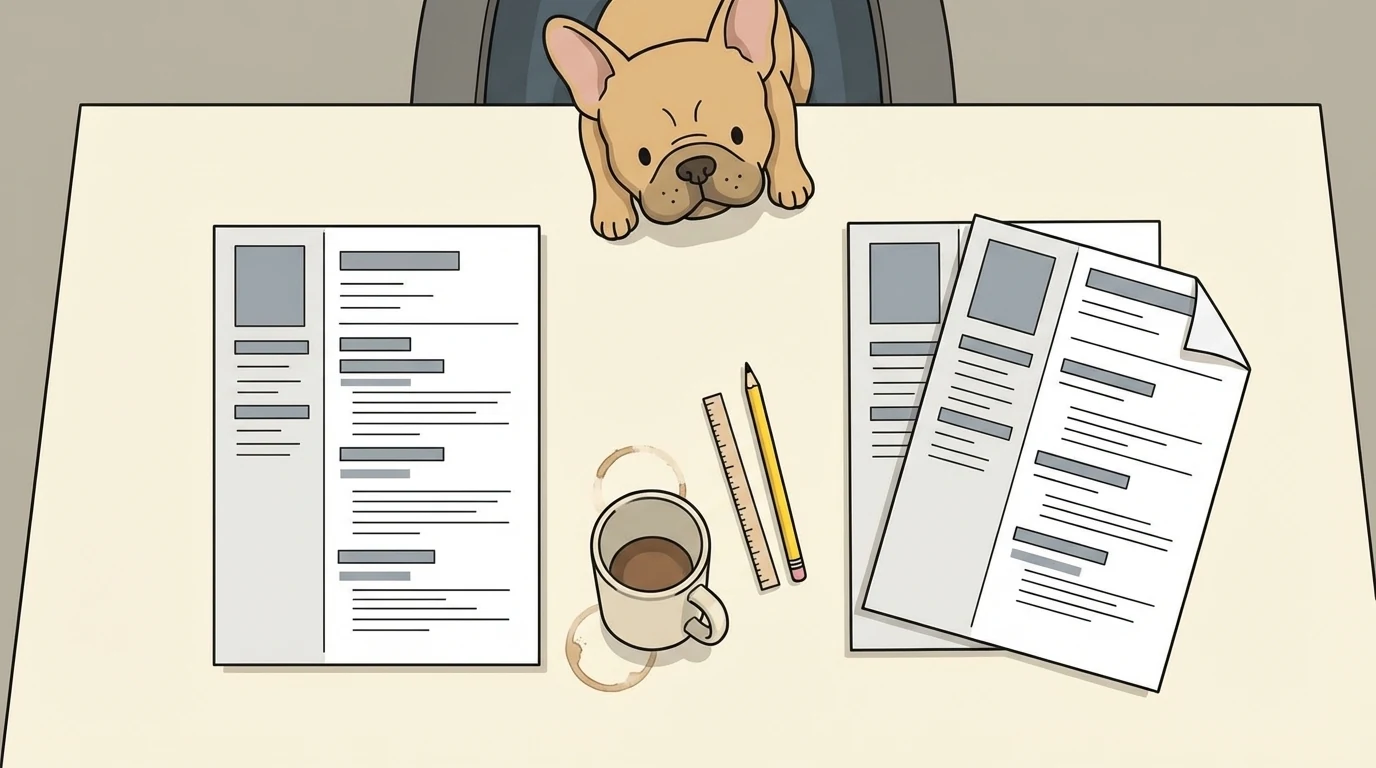
One-Page vs. Two-Page Resume in 2026: When Each Works
Use one page if you have less than ten years of relevant experience. Use two pages if you have more, a technical role with a real tools list, or a senior scope that cannot be quantified in 400 words. That is the whole rule in 2026. The "one page no matter what" advice you inherited is a print-era artifact.
Monster's 2026 State of Resumes Report puts the number plainly: 49% of job seekers now submit resumes longer than one page. The recruiter class adjusted years ago. Applicant tracking systems never cared. The only holdouts are career coaches quoting 1990s rules.
Key Takeaways
- The one-page rule was about paper, not content. Scrolling is free.
- Use one page for early-career, single-industry, and retail or service roles.
- Use two pages for 10+ years of experience, technical stacks with real tool lists, or senior roles requiring quantified scope.
- Never use three pages unless you are in academia, law, or government.
- Length matters less than the top third of page one. If page one does not earn the scroll, the second page does not save you.
Where the one-page rule came from
The one-page resume was a print-era constraint. Recruiters received physical stacks of paper and could not process a second sheet per candidate at volume. In 2026 resumes are PDFs scanned by software and then skimmed on laptop screens. Scrolling is free. The constraint it was solving does not exist.
The rule survived because it has a ring of discipline, "be concise, cut the filler, respect their time." Those are good instincts. They are also achievable on two pages.
When one page is still correct
Early career. Less than five years in the workforce, and your relevant experience fits comfortably on a page. Padding an entry-level resume to two pages with college projects and volunteer work reads as desperation.
Single-industry, single-role candidates. Retail, food service, warehouse, clerical, roles where the work is broadly similar across employers and the fifth bullet per job is just repetition. A recruiter for these roles is scanning for tenure and title consistency, not scope.
Career changers going short. If you are pivoting into a new field and leaning on a skills-first layout, one page often reads cleaner than two. The second page would be filled with context that distracts rather than supports.
If you fit those three profiles, one page is still the right call, not because of the rule, but because the content does not warrant more.
When two pages earns its space
10+ years of relevant experience. Four or five roles at substance, each with real scope and quantified outcomes, simply will not compress to 400 words without losing the evidence. A reader scanning page two of a senior resume is not annoyed, they are doing their job.
Technical roles with a real tools list. Software, data, infrastructure, design-engineering. A credible resume lists the languages, frameworks, platforms, cloud providers, and methodologies you actually used in production. That list alone can run twenty lines. Two pages gives it room.
Senior and executive scope. Director and above. Scope of team, P&L ownership, cross-functional influence, strategic initiatives led. Senior recruiters want to see the shape of responsibility across roles, not a compressed summary. One page flattens the trajectory.
Industries with required credentials. Healthcare, law, academia, certain engineering fields. Licenses, certifications, publications, and continuing education are not optional decoration, they are the hiring criteria. Two pages is standard and often expected.
In all four cases, the second page is not filler. It is the evidence the role is asking for.
Rules for the two-page version
If you go to two pages, the content has to earn it. Three rules:
- Page one carries the pitch. Headline, summary, most recent role, and at least the first three bullets under that role all sit on page one. If the top of page two is where the case starts, you have built the document wrong.
- Page two never ends mid-bullet. Orphan lines look careless. Adjust spacing or cut a bullet so each section closes cleanly on its own page.
- Page two still follows the rules. Same font, same margins, same header structure as page one. Name and contact info repeat in a compact header at the top of page two in case the pages get separated in print.
We cover the format-side details in our resume formatting guide, including header placement and margin defaults.
What recruiters actually complain about
Recruiters who still say "one page only" are not wrong across the board; they are usually responding to something else they saw. In most cases, what annoyed them was not the second page. It was filler: generic objectives, irrelevant early jobs, decorative summaries of skills that should have been bullets under a specific role.
Two pages of evidence is fine. Two pages of padding is not. The test: if you deleted everything on page two and submitted one page, would the reader have a weaker picture of your fit? If yes, page two belongs. If no, cut it.
The point
Match length to content, not to a rule someone handed you in 2009. One page for early-career and simple roles. Two pages for seniority, tools, and scope. Never three. The recruiter has already moved on from the debate, it is time the advice caught up.
Gate Crashers sizes your resume to the role automatically, one page or two, based on what the posting actually rewards. See it at gatecrashers.ai/pricing.